
South Carolina septic maintenance guide
Need help with this septic issue? Send one short request to talk to a qualified pro.
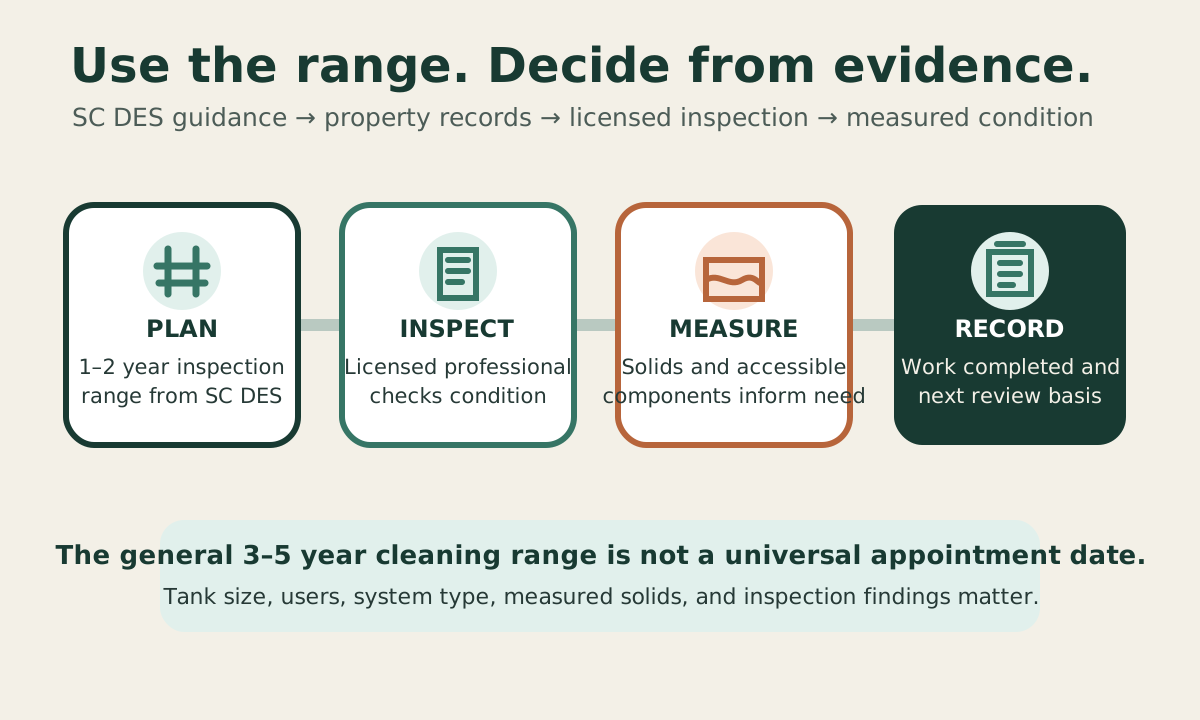
SC DES advises inspections every one to two years and cleaning every three to five years or more frequently depending on tank size and the number of people using the system. It also explains that measured solids determine when pumping is needed, so the general range is not a fixed schedule for one property.
Spartanburg Septic Guide is an independent referral publisher, not the contractor performing the work.
One request goes to one qualified provider at a time. We follow up and use the next qualified provider if contact does not happen.
Published by Demand Leads Media. Reviewed July 30, 2026 against the official sources listed below. Read our editorial standards.
Start with the current SC DES baseline
SC DES advises inspection every one to two years and cleaning every three to five years or more often depending on tank size and system users. Alternative systems with mechanical parts should be inspected at least annually or as the manufacturer recommends.
SC DES also describes solids thresholds used by a contractor to recommend pumping. Use a licensed inspection, the property's records, and the actual system type instead of treating one date as universal.
Protect the tank and drain field
- Keep vehicles, structures, and unnecessary traffic away from the system area
- Direct roof, driveway, and other excess runoff away from the drain field
- Avoid flushing wipes, grease, harsh chemicals, and other unsuitable material
- Repair leaking fixtures and spread high-water-use tasks when practical
Respond safely to a changed condition
SC DES lists indoor backup, surfacing wastewater, and odors as possible signs of failure and explains that lack of maintenance, worn fittings, age, installation, and system use can contribute. One symptom does not establish the cause.
Reduce unnecessary water use during an active backup or discharge, avoid wastewater contact, keep people and pets away, and request qualified evaluation. Never enter or lean over an open tank.
Keep a property-specific record
- System location, known type, tank size, and approved plans when available
- Inspection, pumping, repair, alarm, and maintenance dates
- Observed conditions, provider findings, and work actually completed
- Current permit, correspondence, proposal, invoice, and warranty records
Questions homeowners ask
Does SC DES require every tank to be pumped every three to five years?
No universal date is stated for every system. SC DES gives a general three-to-five-year range and explains that tank size, number of users, measured solids, system type, and inspection findings affect the decision.
Does an odor or wet area prove the drain field has failed?
No. SC DES lists several possible contributors to backups, leaks, and odors. A property-specific cause requires qualified onsite evaluation.
What happens after I send a request?
We send it to one qualified provider at a time and follow up to make sure contact happened. If it did not, we use the next qualified provider. A call, quote, job, and appointment are not guaranteed.
Does this site perform septic work?
No. Spartanburg Septic Guide is an independent referral publisher. It does not employ septic technicians, own service equipment, issue permits, inspect systems, or perform pumping and repairs.
Can service be guaranteed anywhere in Spartanburg County?
No. Spartanburg County is broad. Routing depends on the exact address, a verified provider service boundary, credentials, and current capacity.
Ready to stop guessing and talk to a septic pro?
Tell us what changed, where the property is, and when you need help. We send your request to one qualified provider, follow up, and use the next qualified provider if contact does not happen.
Help me find a septic proNo call-list blast. No pressure to hire. Provider contact and a quote are not guaranteed.
Keep the free Spartanburg County homeowner guide