
Use the symptom, not a guess, to start the conversation
A backup, alarm, odor, wet area, or slow drain can have more than one cause. Record the exact change and let a qualified provider evaluate the system.
Note whether the condition is inside, outside, or both; which fixtures are affected; whether an alarm is active; and whether the change followed rainfall, high water use, pumping, a repair, or a power interruption. That context helps the provider plan the visit without turning a symptom list into a remote diagnosis.
A full tank, blocked line, failed pump, damaged component, saturated drain field, or another condition can create overlapping symptoms.
Warning signs and safer first actions
These signs justify attention, but a visible symptom alone does not determine the repair.
Inside the property
- Sewage backing up through a drain or fixture
- Several drains slowing or gurgling at the same time
- A high-water, pump, or septic alarm
- Fixtures changing after unusually heavy water use
Near the tank or drain field
- Strong sewage odor
- Wet, soft, or surfacing wastewater
- Unusually green growth over one area
- Settling, damage, or a disturbed access lid
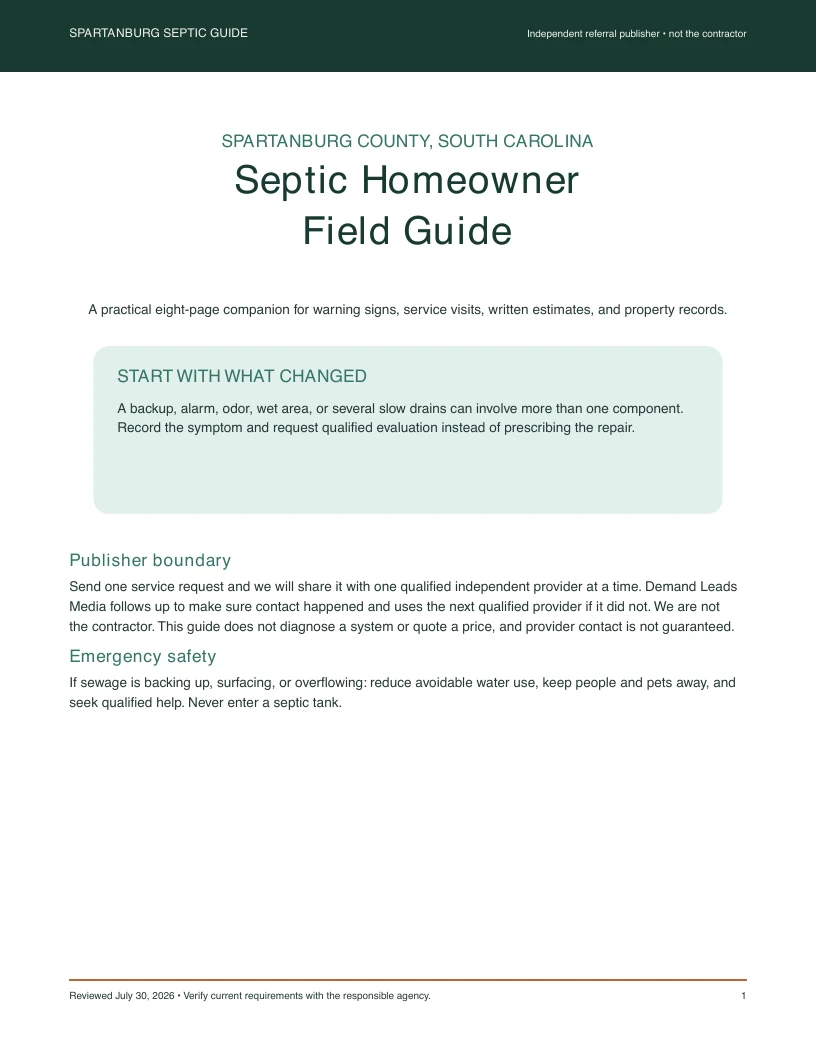
If sewage is backing up, surfacing, or overflowing
- Reduce laundry, dishwashing, bathing, and other avoidable water use.
- Keep children and pets away from sewage and wet ground.
- Do not open, enter, or lean into a septic tank.
- Record when the symptom began and which fixtures are affected.
- Request qualified evaluation and describe the exact change.
Source: SC DES backups, leaks and odors guidance.
Keep the printable checklist beside your records
The PDF adds a service-request worksheet, maintenance record, two-proposal comparison, provider questions, and clickable official sources.
- Eight US Letter pages
- Reviewed July 30, 2026
- Immediate browser download after a successful form submission
Keep a property record, not a one-size-fits-all schedule
SC DES advises inspection every one to two years and cleaning every three to five years or more often depending on tank size and the number of people using the system. It also says measured solids determine when pumping is needed. Those are planning ranges, not a fixed schedule for every Spartanburg County property.
Household use, tank size, measured solids, system type, pumps, controls, and prior findings can change the interval.
Record each provider’s measured findings so the next recommendation begins with evidence instead of an estimated date.
Protect the drain field by directing roof, driveway, and sump water away from it, avoiding vehicle traffic and structures over the treatment area, and fixing plumbing leaks that add unnecessary wastewater. Keep deep-rooted landscaping and new improvements away from known system components until their locations and setbacks are confirmed.
Read SC DES maintenance guidanceKeep these together
- Permit, plan, and installation records
- Pumping, inspection, and repair dates
- Known tank and drain-field location
- System type and maintenance agreement, if applicable
- Written findings, photos, receipts, and next steps
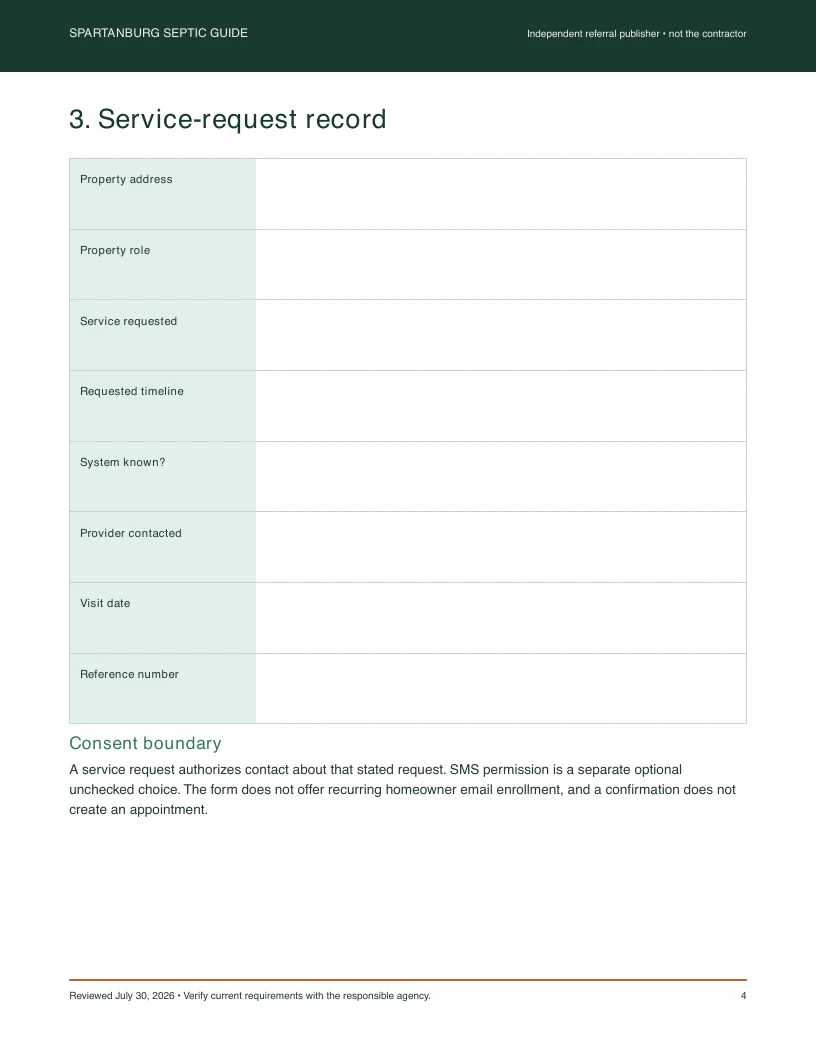
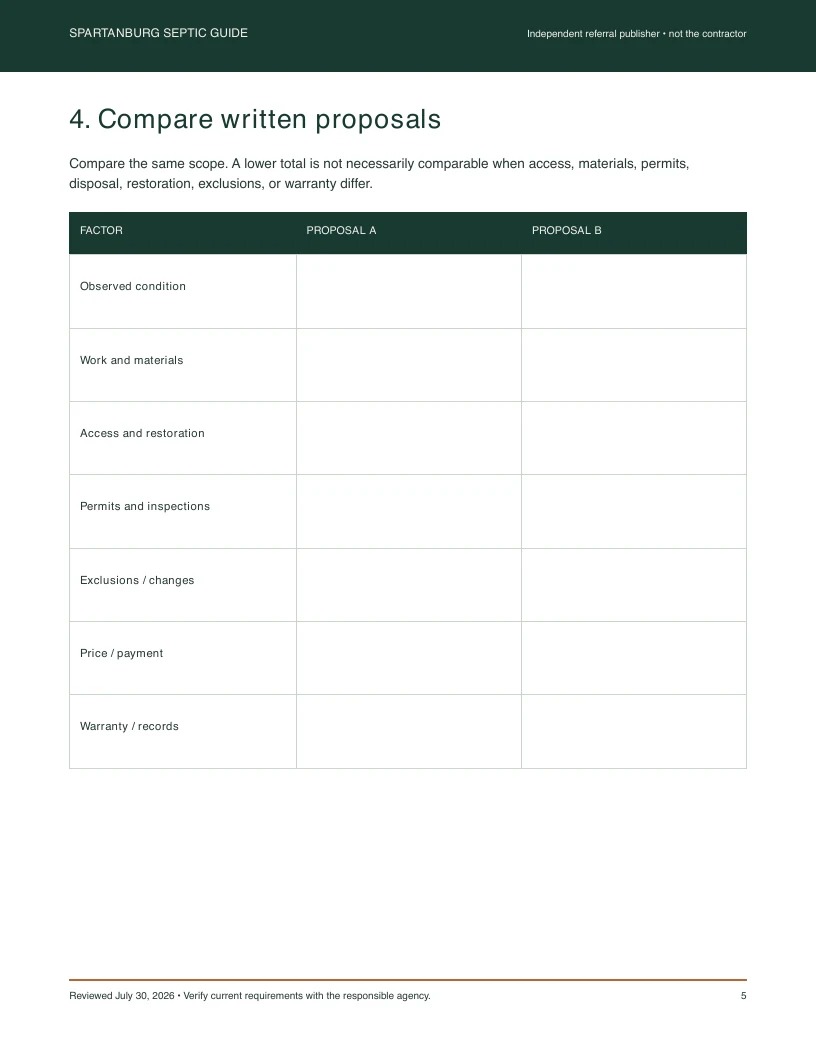
Preview the pages you will receive
These are direct renders from the downloadable PDF, not decorative mockups or placeholder pages.
Prepare useful details before a service visit
Tell the provider the purpose of the visit before asking for a price. Routine maintenance, a transaction inspection, an active warning sign, and a permitted repair require different preparation and may include different access, documentation, or diagnostic work.
- Property address and owner or authorized-agent status
- When the symptom began and which fixtures are affected
- Recent heavy water use, rainfall, pumping, repairs, or power loss
- Known system type, tank location, and drain-field location
- Permit, pumping, inspection, and repair records
Compare the written scope, not only the total
Put competing proposals side by side. A lower total may reflect fewer access points, different disposal or restoration assumptions, excluded permit work, or a repair allowance that has not yet been diagnosed. Ask the provider to identify assumptions and change conditions in writing.
- Specific work and included components
- Access, excavation, and lid work
- Permit and inspection responsibility
- Waste handling and site restoration
- Exclusions, change conditions, warranty, and payment schedule
Verify the South Carolina and county processes before work begins
SC DES publishes the septic site-evaluation, permit, installation, inspection, and professional-licensing paths. Spartanburg County separately publishes its residential building-permit process.
Rules, forms, contacts, and agency responsibilities can change. Confirm the current path for the property and proposed work.
For regulated work, verify the legal business and credentialed person responsible for the scope. Ask who submits the permit, who schedules inspections, and which approved drawings, photographs, corrections, and closeout records will remain with the property.
Common homeowner questions
Use these answers to set a useful service scope without assuming a diagnosis, price, or provider availability.
Does a septic warning sign prove the tank needs pumping?
No. Backups, alarms, odors, slow drains, and wet ground can involve different plumbing or septic components. Describe the symptom and request qualified evaluation instead of prescribing the repair.
How often should a household septic tank be pumped?
SC DES gives a general three-to-five-year cleaning range, with more frequent service depending on tank size and system users. It also says measured solids determine when pumping is needed, so use inspection findings, system type, and property records.
What should I ask before approving septic work?
Ask what was observed, what work and components are included, who handles permits and inspections, what is excluded, what could change the price, and which records you will receive.
Does downloading the field guide request septic service?
No. The guide form provides immediate access to the printable guide only. It does not create a service request or recurring-email permission.
A completed service request goes to one qualified independent provider at a time. Demand Leads Media follows up and uses the next qualified provider if contact does not happen. We are not the contractor. This guide does not diagnose a system or quote a price, and provider contact is not guaranteed.